OK so winter's here...
Monday, 21 January 2013
Thursday, 10 January 2013
Back again
Well here I am again. Temperatures in double figures when it should be freezing. Heating off, doors open. All very pleasant but also a bit weird.
I seem to have eaten my way through all the carrots and leeks but still have plenty of fresh sprouts and some kale.
I realize I threatened to stop blogging but that doesn't seem to have happened so happy new year to us all is what I say.
I seem to have eaten my way through all the carrots and leeks but still have plenty of fresh sprouts and some kale.
I realize I threatened to stop blogging but that doesn't seem to have happened so happy new year to us all is what I say.
Saturday, 5 January 2013
Rocket stove
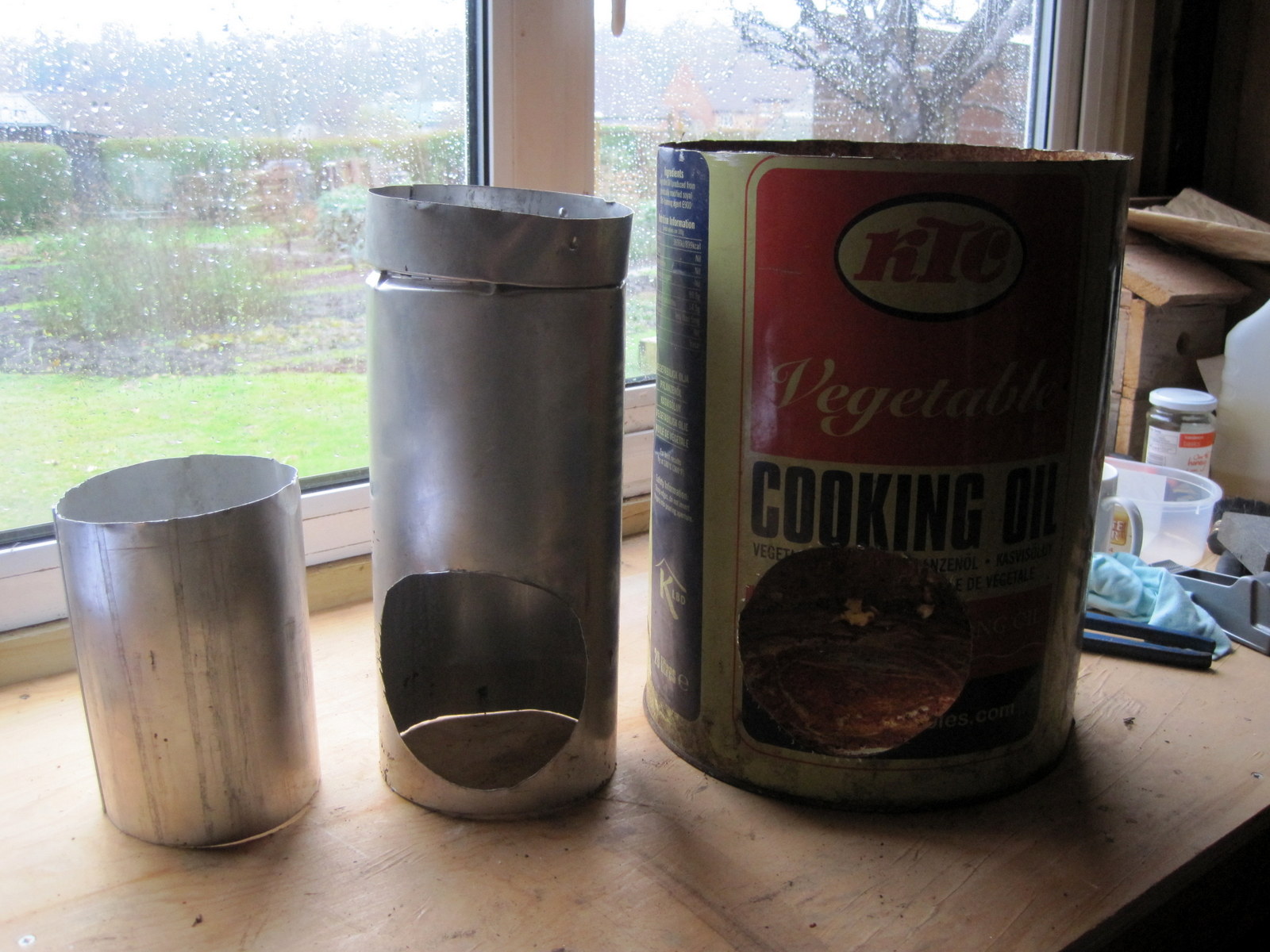
These seem to be all the rage at the moment so I thought I'd have a crack at making one. It's basically just cooking over a chimney but is meant to use less fuel than an open fire.
Starting with an old five gallon cooking oil drum...
...cutting the top off:
Chimney parts from old stove pipe cut to size and ready to assemble:
The chimney will be joined like this inside the stove:
Parts assembled and drum insulated with sand:
Fire started:
Sticks are then fed in at the bottom on a bit of metal shaped to fit inside the chute:
Kettle on, job done:
Sunday, 30 September 2012
Autumn
Autumn seems a little early this year, the leaves aren't turning much yet but it sure has turned chilly.
Still plenty to eat of course, and will be all winter long all being well. I'm loving all the fruit - there's not many apples this year but plenty of blackberries, raspberries and grapes.
It seems like autumn for this blog too; I've been doing it for 7 years now and although there's always something new going on there's only so many ways I can describe how I sow a row a peas or plant out the cabbages. So maybe it's time to put it to rest.
Looking back I can see changes in my approach - not so much in the fruit and vegtable growing but in the flower department I've gone from growing cut flowers to growing for nectar and pollen for insects. I've always gardened organically and with wildlife in mind; being aware of all the other creatures who depend on how I manage this plot is more important to me now than ever, for them and for all the generations to come.
Still plenty to eat of course, and will be all winter long all being well. I'm loving all the fruit - there's not many apples this year but plenty of blackberries, raspberries and grapes.
It seems like autumn for this blog too; I've been doing it for 7 years now and although there's always something new going on there's only so many ways I can describe how I sow a row a peas or plant out the cabbages. So maybe it's time to put it to rest.
Looking back I can see changes in my approach - not so much in the fruit and vegtable growing but in the flower department I've gone from growing cut flowers to growing for nectar and pollen for insects. I've always gardened organically and with wildlife in mind; being aware of all the other creatures who depend on how I manage this plot is more important to me now than ever, for them and for all the generations to come.
Winter larder
I've got potatoes in store and peas in the freezer; the brussels sprouts are starting to fill out and they'll be plenty of leeks and carrots too:
And what would I do without kale, the plant that keeps on giving:
Meadow grass management
I've cut back the meadow grass in the orchard so it looks much bigger all of a sudden. I'll keep it short now so that the finer grasses and wildflowers can get off to a good start next spring. I'm also planning to scarify some areas and sow some yellow rattle.
Carnations
This is the only cut flower I grow these days - they've been later than usual this year after the poor summer but worth waiting for.
Bees and butterflies
I'm proud to say I've more flowers than ever this year to keep the bees and butterflies supplied with nectar during this critical late part of the season. The queen bumblebees are busy feeding up prior to hibernation and there are still plenty of carder bees about too.
During sunny times there's still butterflies about - plenty of whites and also small tortoiseshells, red admirals, speckled woods and commas.
Saturday, 25 August 2012
Getting gappy
It's that time of year when gaps start appearing on the plot as crops are harvested. I mulch the bare soil with compost or fork in chicken pellets depending on what I'll be doing with it next. I'll also be sowing green manures in some of the spaces which won't be being used over the winter.
Still plenty to eat - peas and beans, potatoes, carrots, cabbage, tomatoes, rocket, herbs - and fruit - raspberries, blackberries and the first plums and grapes.
Looking ahead I've been sowing mizuna, leaf beet, Chinese mustard and spring cabbage. And in the flower department foxgloves and larkspur.
These days, as you may have gathered, I'm more and more interested in making sure the plot is of use to wildlife, so I'm devoting more space to flowers for our bees and butterflies.
These ones are new this year:
Still plenty to eat - peas and beans, potatoes, carrots, cabbage, tomatoes, rocket, herbs - and fruit - raspberries, blackberries and the first plums and grapes.
Looking ahead I've been sowing mizuna, leaf beet, Chinese mustard and spring cabbage. And in the flower department foxgloves and larkspur.
These days, as you may have gathered, I'm more and more interested in making sure the plot is of use to wildlife, so I'm devoting more space to flowers for our bees and butterflies.
These ones are new this year:
Aster Frikartii Monch
Catananche Coerulea (Cupid's Dart) - grown from seed and just starting to flower.
Scabiosa Beaujolais Bonnets - also grown from seed and just starting to flower.
Fruit
The top fruit hasn't done at all well this year - the apples, pears and plums all suffered through there're not being many pollinators about back in the cold and wet at blossom time. The only exception has been the little cherry plums which were blossoming during the heatwave in March. The blackbirds and thrushes carry most of them away but it's not as though I can eat them all. And the trees are not completely bare; having less helps me appreciate what I have got all the more. How right on is that?
With the exception of the gooseberries the soft fruit have been as abundant as ever. The summer raspberries have given way to the autumn crop, the grapes are about ready and the wild blackberries never have a problem fruiting - and their flowers are so useful for the bees and butterflies.
Holly blue on blackberry flower
Grapes ready to nibble
Labels:
Apples,
Blackberries,
Cherry plum,
Gooseberries,
Pears,
Plums,
Raspberries
Friday, 24 August 2012
Peas and beans
Harvested the last of the maincrop peas today; I've been freezing most of them as I now have plenty of beans - runners, climbing French and the wonderful Egyptian pea bean. This last one always crops well in either drought or wet; it's been doing well for me from saved seed for several years now.
Maincrop potatoes
These are a bit disappointing this year, but hardly surprising given the conditions we've had. I cut the leaves off at the first signs of blight about a month ago so they're on the small size, and at least half are affected by wireworm. I'll store them in trays rather than sacks so that I can keep an eye on them over the coming weeks and months. Still plenty to keep me going so at least I won't starve.
Nicotiana mutabilis
These have been the surprise hit of the year. I'd grown them from seed under glass and after the meadow mix failed to germinate I put them in in their place. They sat and sulked through the rain and somehow survived the attentions of all the slugs; they must have been putting down good roots because in the last month they've thrown up all these flowers up to 2 metres high. I always used to grow sylvestris but found out that British moths, unlike in their South American cousins, are unable to get at the nectar at the base of their long tubular flowers. Not so mutabilis, which is also enjoyed by the carder bees, and even the smaller honey bees squeeze their way into the flowers.
More flowers for bees and butterflies
Corn marigold
Field poppy
Rose campion
Marjoram
Verbena
Eryngium "Miss Wilmot's Ghost"
Cosmos "Candy Stripe"
Aster
Echinacea purpurea
Verbena bonariensis
Subscribe to:
Posts (Atom)